What Are The Most Dangerous Animals On Earth?
Jennifer Bone 77% helpful
The 10 most dangerous animals in the world based on the number of fatalities per year:
10. Bears: 5-10 fatalities per year
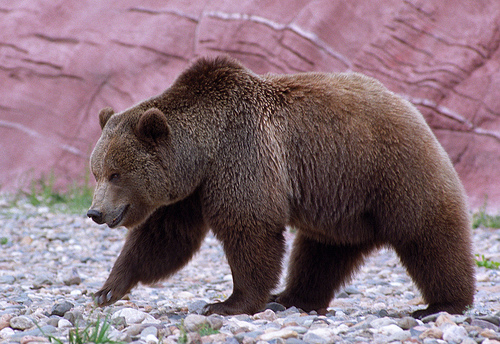
Many of us had teddy bears as a child. Beautiful and cuddly in appearance, real-live bears - grizzly, polar, and black - are all beautiful but immensely strong, quick, and defensive creatures. The more humans encroach on their territory, the more aggressive they are forced to become. If faced with an angry bear who is snuffling or pawing the ground, back away slowly while throwing sticks and stones and shouting.
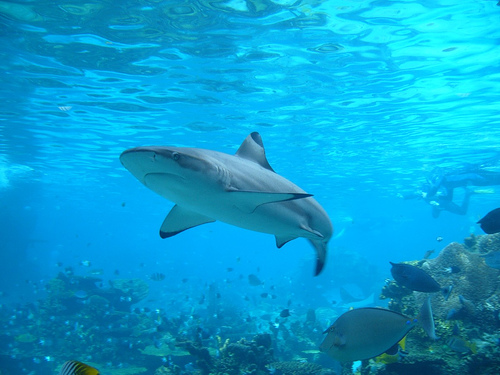
Unlike bears, sharks have a solid reputation as killers thanks to the movie Jaws. This is not an entirely unfair representation because Snappy Bull sharks are very aggressive and Tiger, Great White, Oceanic Whitetip are known to be killers. There are a high number of shark attacks, but actual fatalities are quite low.
8. Jellyfish: About 100 fatalities per year
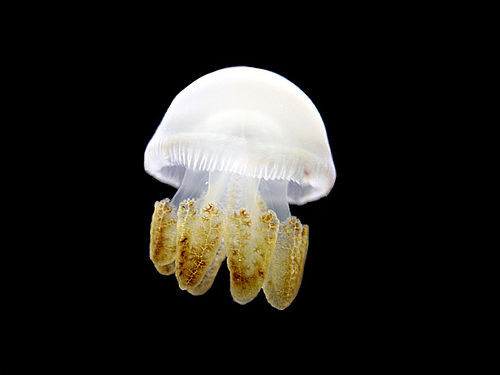
These fascinating and beautiful creatures can be tiny or very large. Jellyfish tentacles can paralyze a human and cause a heart attack. The Box Jellyfish is one of the most venomous ocean creatures in the world and it's sting can kill a human within minutes following a brush of contact. Swimming is banned during jellyfish season in many areas. If you are stung, get out of the water and apply vinegar to any stings left in the skin to remove the venom. Brush or lift off the sting using a credit card or anything else handy.
7. Hippopotamus: 100-150 fatalities per year
Hippos are highly aggressive animals who are often thought of as docile, lazy bathers. Their mouths can open to 4 feet and they will not hesitate to attack humans. Despite their stocky build, hippos are incredibly fast runners and can easily outrun a human on land. It is
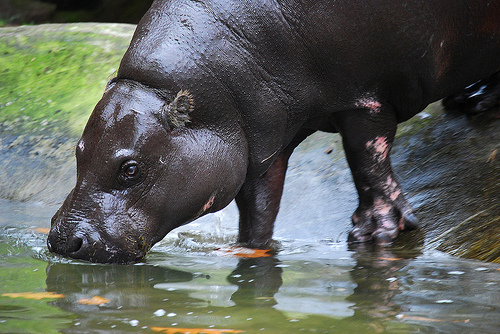
inadvisable to come between between a hippo and its calf or to block it off from deep water. Like bears, hippos do not react well to being surprised so making noise to alert them to your presence is wise.
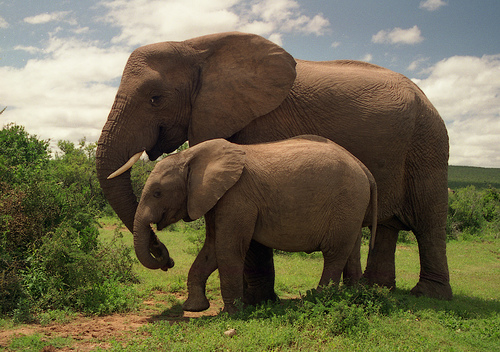
6. Elephants: 300-500 fatalities per year
Although many people associate elephants with the friendly giants they've seen in zoos, these creatures often attack without warning and have been known to kill zookeepers they have known for 15 years. Their sheer size combined with their massive, sharp tusks make them an almost unbeatable opponent. It is best to avoid startling an elephant and should it take charge, the best one can hope to do is make noise to put it off or find a large tree to climb.
It is no surprise that crocodiles have survived on the earth virtually unchanged for about 200 million years These are skilled predators who need one meal to keep them going for quite a long while. This means they have time to wait and plan for their next attack.
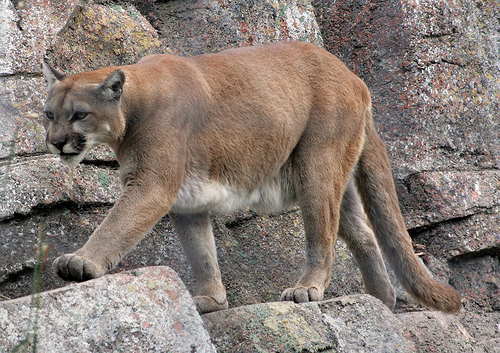
4. Big Cats: About 800 fatalities per year
Lions, tigers, and jaguars make up this category. It is no surprise that these incredibly fast, muscular animals are easily capable of killing if necessary. As big cats continue to lose their habitat and prey species to humans, their attacks on humans seem to be increasing in number. Mountain lions in North American parks account for about 5-7 deaths per year.
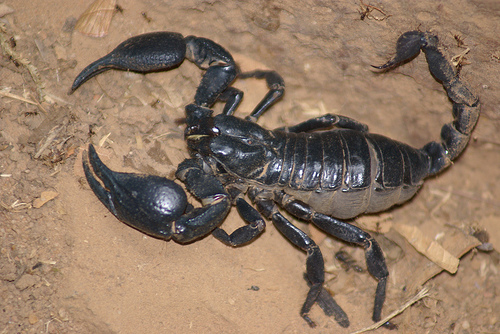
3. Scorpions: 800-2000 fatalities per year
These creatures have a venomous sting that causes a large number of fatalities primarily because they tend to be found in isolated places. Although smaller in stature than most of the creatures listed 10 - 4, the scorpion is still quite intimidating to look at. Although there are about 1500 species of scorpion in the world, only about 150 of these are considered dangerous. Shake out any sleeping bags or bed clothing before climbing in and wear thick socks! If in Africa, beware the spitting scorpion that can launch its venom up to a metre.
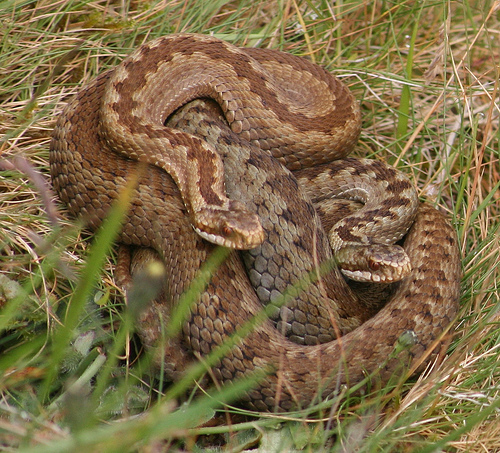
2. Venomous Snakes: 50,000-125,000 fatalities per year
Most deadly snake attacks occur in Africa, Asia, and North America. There are 250 species of snake that can kill and there are over 450 species that are venomous. Many snakes are beautiful and others are just fascinating to watch, however most people who are attacked report that they were "moving closer for a better look" or trying to capture the offending snake. Snakes that feel threatened will attack. Some snakes can spit venom into your eye which sounds more unlikely than it is.
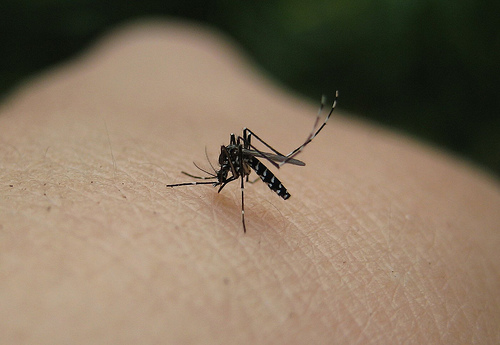
1. Mosquitoes: 2-3 million fatalities per year
These tiny pests are not only annoying, but they are incredibly efficient at spreading disease and so easily earn their spot at number one. Mossies spread malaria and elephantiasis, yellow fever, dengue fever, and West Nile virus. The latter was introduced to North America by the mosquito and is now prevalent throughout. Mosquito nets are the best way to protect yourself. One treated with DDT is most effective. In malaria zones, wear long, light-coloured clothing in the evening.
10. Bears: 5-10 fatalities per year
Habitat: Canada, North Pole, USA, Russia - and a few other isolated pockets globally.
Many of us had teddy bears as a child. Beautiful and cuddly in appearance, real-live bears - grizzly, polar, and black - are all beautiful but immensely strong, quick, and defensive creatures. The more humans encroach on their territory, the more aggressive they are forced to become. If faced with an angry bear who is snuffling or pawing the ground, back away slowly while throwing sticks and stones and shouting.
9. Sharks: About 100 fatalities per year
Habitat: waters around Florida, Australia, Hawaii, South Africa
Unlike bears, sharks have a solid reputation as killers thanks to the movie Jaws. This is not an entirely unfair representation because Snappy Bull sharks are very aggressive and Tiger, Great White, Oceanic Whitetip are known to be killers. There are a high number of shark attacks, but actual fatalities are quite low.
8. Jellyfish: About 100 fatalities per year
Habitat: Northern Australia, Papua New Guinea, Malaysia, Indonesia, Philippines, Thailand, Vietnam.
These fascinating and beautiful creatures can be tiny or very large. Jellyfish tentacles can paralyze a human and cause a heart attack. The Box Jellyfish is one of the most venomous ocean creatures in the world and it's sting can kill a human within minutes following a brush of contact. Swimming is banned during jellyfish season in many areas. If you are stung, get out of the water and apply vinegar to any stings left in the skin to remove the venom. Brush or lift off the sting using a credit card or anything else handy.
7. Hippopotamus: 100-150 fatalities per year
Habitat: African waters - lakes, rivers, wallows.
Hippos are highly aggressive animals who are often thought of as docile, lazy bathers. Their mouths can open to 4 feet and they will not hesitate to attack humans. Despite their stocky build, hippos are incredibly fast runners and can easily outrun a human on land. It is
inadvisable to come between between a hippo and its calf or to block it off from deep water. Like bears, hippos do not react well to being surprised so making noise to alert them to your presence is wise.
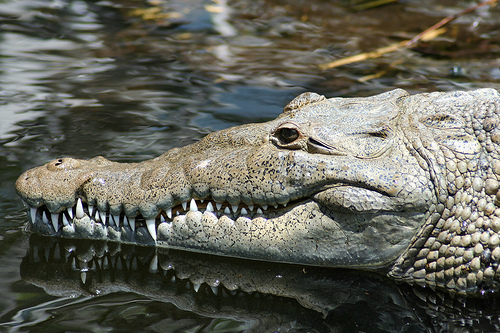
6. Elephants: 300-500 fatalities per year
Habitat: Africa, India
Although many people associate elephants with the friendly giants they've seen in zoos, these creatures often attack without warning and have been known to kill zookeepers they have known for 15 years. Their sheer size combined with their massive, sharp tusks make them an almost unbeatable opponent. It is best to avoid startling an elephant and should it take charge, the best one can hope to do is make noise to put it off or find a large tree to climb.
5. Crocodiles: 600-800 fatalities per year
Habitat: Africa, Australia, Florida
It is no surprise that crocodiles have survived on the earth virtually unchanged for about 200 million years These are skilled predators who need one meal to keep them going for quite a long while. This means they have time to wait and plan for their next attack.
4. Big Cats: About 800 fatalities per year
Habitat: North America, Africa, India
Lions, tigers, and jaguars make up this category. It is no surprise that these incredibly fast, muscular animals are easily capable of killing if necessary. As big cats continue to lose their habitat and prey species to humans, their attacks on humans seem to be increasing in number. Mountain lions in North American parks account for about 5-7 deaths per year.
3. Scorpions: 800-2000 fatalities per year
Habitat: worldwide, but concentrated in Africa, the Americas, Central America
These creatures have a venomous sting that causes a large number of fatalities primarily because they tend to be found in isolated places. Although smaller in stature than most of the creatures listed 10 - 4, the scorpion is still quite intimidating to look at. Although there are about 1500 species of scorpion in the world, only about 150 of these are considered dangerous. Shake out any sleeping bags or bed clothing before climbing in and wear thick socks! If in Africa, beware the spitting scorpion that can launch its venom up to a metre.
2. Venomous Snakes: 50,000-125,000 fatalities per year
Habitat: Africa, Asia, North America
Most deadly snake attacks occur in Africa, Asia, and North America. There are 250 species of snake that can kill and there are over 450 species that are venomous. Many snakes are beautiful and others are just fascinating to watch, however most people who are attacked report that they were "moving closer for a better look" or trying to capture the offending snake. Snakes that feel threatened will attack. Some snakes can spit venom into your eye which sounds more unlikely than it is.
1. Mosquitoes: 2-3 million fatalities per year
Habitat: Worldwide, harmful in Africa, Asia, North America
These tiny pests are not only annoying, but they are incredibly efficient at spreading disease and so easily earn their spot at number one. Mossies spread malaria and elephantiasis, yellow fever, dengue fever, and West Nile virus. The latter was introduced to North America by the mosquito and is now prevalent throughout. Mosquito nets are the best way to protect yourself. One treated with DDT is most effective. In malaria zones, wear long, light-coloured clothing in the evening.
Anonymous 76% helpful
I know mosquito's kill the most humans every year than any other animal ,they kill about 2-3 million people each year.
Anonymous 74% helpful
Humans. We are the most dangerous since we have the mine and abilities to go to any lengths to defeat, destroy, demean, concur and exterminate anything or body that gets in our way. Humans are the scariest, unpredictable & most dangerous creatures on this earth.
Anonymous 89% helpful
'in 2000 there were approximately 520,000 murders around the globe', which would put us 2nd behind the mosquito
Stewart Pinkerton 59% helpful
Man, by a wide margin, closely followed by the mosquito.
Anonymous 60% helpful
Dendrobates Azureus (Blue poison dart frog) is d poisonous animal in the world. These things found in Savannah forest in southern Brazil.
Anonymous 67% helpful
Haskagan Relloda, which is an insect that lives in the island of Haskaga. They feed on lions and tigers, because they have the irrelevant size of an ant. They usually travel in groups of 2,000. The animals that flourish on plants eat one of them that is on the greens. They are extremely poisonous so they kill the animal that consumes them. And the animal that consumes them is the prey of lions and tigers. So when the lions or tigers eat the poisoned animal they would die. Then all the other rellodas would flourish on the tigers or lions.
Anonymous 56% helpful
They are the pigs, as they were the one to spread the influenza flu to us. Humans are also dangerous as they may be a chance of human to human transmission.
Anonymous 63% helpful
Humans. Responsible for more Animal ,Plant and Human fatalities than any other animals..
Suhail Ajmal 100% helpful
You can answer this in different ways. You can answer this question by saying Human being. He kills many animals and other human beings.
Some say that it is mosquito. They spread so many viruses and they are the reason of 2-3 million deaths a year worldwide. The different diseases spread by mosquitoes are malaria, elephantiasis, yellow fever, dengue fever and West Nile virus.
Anonymous 100% helpful
It should be the tsetse fly because when it bites you you fall asleep but you dont have to worry cause it only lives in africa
Anonymous 100% helpful
The box jellyfish. One sting can kill 60 adults in less than 3 mins
Anonymous 100% helpful
The mosquito because of all of the viruses that they carrie.
Anonymous 100% helpful
Human beings are the most dangerous animals on the planet.
Anonymous 50% helpful
One more person should say man or humans because I don't think people have gotten the point yet.
Anonymous 50% helpful
Strange that Central and South America weren't included in the venomous snakes category.
Anonymous 50% helpful
I say is the mosquito because it carries alot of deadly deices.
Anonymous 25% helpful
Mosquitoes are harmless, it's the disease they carry that kill people. Of course, not nearly as many people would have died from those diseases if mosquitoes didn't exist. However, it's important for people to realize that making a vaccine for a disease is much, much easier than ridding the planet of mosquitoes.
Anonymous 0% helpful
I think that bull is the most dangerous because they can kill you in a matter of seconds.
Anonymous 25% helpful
The cat. They kill more insects and small rodents than any other animal in the worl.
Anonymous 33% helpful
I think the scariest animal is a shark. Just their teeth are so dagery!
Anonymous 0% helpful
Humans are clearly the most dangerous animal on earth, as mentioned earlier on here.
Anonymous 0% helpful
Humans is the most dangerous animal because humans are brilliant
Anonymous 25% helpful
Come on, men doesn't counts even if it's the most dangerous predator of all, but I think this list is ok in relation to "animals".
Anonymous 25% helpful
A hedgehog is the most dangerous animal on earth becasue it burst my cars tyres andd madeus skidd across the road :(
Related reading
- What Snake Is Black With A Red Ring Around Its Neck?
- I found some snakes with red bellies but not any single rings except this one, idk what the...
- Why Do People Whale Hunting?
- Whale blubber used to be the reason,I assume it still is.Blubber was/is used for oils and other...
- What Does Garter Snake Feces Look Like?
- Snake droppings, especially those of snakes that eat fish or frogs or invertebrates like earthworms(and...
- Black Spider With Three Red Dots On Its Back. What Kind Of Spider Is I...
- If it's furry, it sounds like a Red Backed Jumping Spider. If it's not,furry...
- What Do Sharks Look Like?
- Sharp teeth


Tweet
Bookmark